Salesforce Sales Cloud vs HubSpot (2026): Cost, Setup Time and Fit Compared
Salesforce Sales Cloud and HubSpot both sell CRM for revenue teams, but they cost differently and take different effort to roll out. Here is how they compare on price, setup time, integrations, AI and compliance.
By Value-Position · Published · Written with AI from our dataset; figures update live
Choose Salesforce Sales Cloud when your sales team runs complex, multi-stage pipelines and you want agentic AI for lead qualification and forecasting on a platform that also covers service and marketing. It fits enterprise and mid-market organizations with a sales ops or RevOps function, and buyers who value a large partner, app and learning ecosystem. Choose HubSpot when you want marketing, sales and service on one shared CRM with a free entry point and lower setup effort. It suits scaling and mid-market teams, and buyers who would rather rely on self-serve onboarding than a partner-led rollout.
| Metric |  Salesforce Sales Cloud Salesforce Sales Cloud |  HubSpot HubSpot |
|---|---|---|
| Typical annual cost | $30,000/yr | $15,000/yr |
| Starting price | $300/yr | Free plan |
| Mandatory implementation fee | None | None |
| Time-to-value | 2–4 weeks (30-day free trial) | ~2–4 weeks |
| Implementation friction | 4/5 | 2/5 |
| Pricing model | Per-user subscription licences; most products are billed annually in advance, Salesforce Starter can be monthly or annual. | Free tier plus paid Starter, Professional and Enterprise subscriptions, billed per seat; Premium Support sold as an add-on on Enterprise (exact list prices not stated on cited pages) |
| Ideal team size | 20–5,000+ seats | 10–1,000+ |
| MCP (AI assistants) | Not recorded | Not recorded |
| AI features | Agentic workflows, Predictive analytics | Agentic workflows, Predictive analytics |
| Compliance listed | None listed | SOC 2 |
| Support | Help centre / docs, Community forum | Community forum, Help centre / docs, Email, Live chat, Phone, Dedicated account manager |
Estimates from each vendor’s public pages, refreshed regularly. Confirm pricing with the vendor.
The lines cross at the median of the solutions shown, so about half sit on each side of each line.
Cost
Salesforce Sales Cloud- Typical annual cost
- $30,000/yr
- Starts at
- $300/yr
- Implementation fee
- None
- Seat tiers
- Not published; per-seat licences with annual contracts typical
- Pricing model
- Per-user subscription licences; most products are billed annually in advance, Salesforce Starter can be monthly or annual.
- Add-on costs
- MuleSoft licences where built-in integration does not cover on-premises or legacy systems
- Success Cloud advisory, adoption and support plans
- Agentforce and Data 360 consumption priced in Flex Credits
- Apps and agents purchased through AgentExchange
HubSpot- Typical annual cost
- $15,000/yr
- Starts at
- Free plan
- Implementation fee
- None
- Seat tiers
- Free, Starter, Professional and Enterprise editions; no seat minimum stated on cited pages
- Pricing model
- Free tier plus paid Starter, Professional and Enterprise subscriptions, billed per seat; Premium Support sold as an add-on on Enterprise (exact list prices not stated on cited pages)
- Add-on costs
- Premium Support add-on with a designated team, priority routing and faster response times, available on top of Enterprise plans
- Optional paid onboarding, training and consulting through HubSpot Onboarding Services
HubSpot costs less than Salesforce Sales Cloud. Typical annual cost is $15,000 a year for HubSpot and $30,000 a year for Salesforce Sales Cloud. HubSpot's entry point is a free plan, under a free tier plus paid Starter, Professional and Enterprise subscriptions, while Salesforce Sales Cloud's starting price is $300 a year. Salesforce Sales Cloud licences are per user, quoted by sales, with most subscriptions billed annually in advance although Salesforce Starter can be monthly. HubSpot sells Premium Support as an add-on on Enterprise. Neither vendor records a mandatory implementation fee, so the deciding line item is admin and partner help rather than licences alone.
Implementation and time to value
HubSpot is ahead of Salesforce Sales Cloud on both time-to-value and implementation effort in our orderings. Its recorded time-to-value is about 4 weeks, and Salesforce Sales Cloud sits in the same band, so the gap shows up in setup work rather than in the first usable login. HubSpot's implementation friction is 2 out of 5; Salesforce Sales Cloud is recorded at 4 out of 5, which usually means admin time, data hygiene and change management before the rollout pays off. Either way, the first month goes on migration and training. Budget partner help and a longer runway for Salesforce Sales Cloud.
Integrations and AI
| Item | Salesforce Sales Cloud | HubSpot |
|---|---|---|
| MCP (AI assistants) | Not recorded | Not recorded |
| Salesforce | Native | Not recorded |
| AWS | Not recorded | Native |
| Snowflake | Not recorded | Not recorded |
| HubSpot | Not recorded | Not recorded |
| Google Workspace | Not recorded | Via partner |
| Microsoft 365 | Not recorded | Via partner |
| SAP | Not recorded | Not recorded |
| Slack | Via partner | Not recorded |
Both products list agentic workflows and predictive analytics. Salesforce Sales Cloud describes Agentforce agents for lead qualification, workflow automation and deal-outcome prediction, while HubSpot describes Agent Hub, whose Customer, Prospecting and Data agents act inside the CRM and hand off to people. Neither vendor's cited pages state which models power the agents or whether customers can bring their own key. On connectors, Salesforce Sales Cloud lists Salesforce natively and Slack through partners; HubSpot lists AWS natively and Google Workspace and Microsoft 365 through partners. Neither lists an MCP server.
Security, compliance and support
| Item | Salesforce Sales Cloud | HubSpot |
|---|---|---|
| SOC 2 | Not listed | Listed |
| ISO 27001 | Not listed | Not listed |
| GDPR | Not listed | Not listed |
| HIPAA | Not listed | Not listed |
| FedRAMP | Not listed | Not listed |
| ISO 42001 | Not listed | Not listed |
| Support hours | Not recorded | Not recorded |
HubSpot lists SOC 2 among its compliance credentials. Salesforce Sales Cloud has no certifications listed on the vendor pages we cite, and neither vendor states its support hours. Support channels differ: Salesforce Sales Cloud lists a help centre and community forum, while HubSpot lists a community forum, help centre and docs, email, live chat, phone and a dedicated account manager. Where a certification or a named account contact is a hard requirement, that difference will decide more than feature parity.
Which should you choose?
Choose Salesforce Sales Cloud if…
Salesforce Sales Cloud is the better fit when your pipeline is complex, spans many stages and needs AI agents handling qualification, follow-up and forecasting. It also makes sense when you want sales, service and marketing standardized on one platform, backed by a large partner, app and learning ecosystem. The trade-off is funding: pricing is quoted by sales, implementation friction is 4 out of 5, and the platform rewards a real sales ops or RevOps function. Teams that want a zero-configuration CRM may prefer a simpler tool.
Best for
- Enterprise and mid-market sales organisations running complex, multi-stage pipelines
- Teams that want AI agents to handle lead qualification, follow-up and case resolution
- Companies standardising sales, service and marketing on one integrated platform
- Businesses that value a large partner, app and learning ecosystem over a simple tool
Less suited for
- Very small teams looking for a cheap, zero-configuration CRM
- Buyers who insist on transparent self-serve list pricing without a sales call
- Organisations unwilling to fund admins, data hygiene and change management
Choose HubSpot if…
HubSpot is the better fit when you want marketing, sales and service on one shared CRM rather than stitched point tools, and when a free entry point before paid seats matters. It also suits teams that want built-in AI agents for support deflection, prospecting and account insight, and support channels that include email, live chat and phone. Implementation friction is 2 out of 5, lighter than Salesforce Sales Cloud's, so a team without a dedicated admin can get to a working CRM quickly. Deep vertical configuration out of the box is where it fits less well.
Best for
- Scaling B2B marketing, sales and service teams that want one shared CRM instead of stitched point tools
- Companies that want a free entry point before committing budget to a paid CRM platform
- Teams wanting built-in AI agents for support deflection, prospecting and account insight
- Mid-market and enterprise firms consolidating disconnected marketing, sales and service stacks
Less suited for
- Organisations needing deep vertical configuration out of the box
- Teams requiring fully on-premise or self-hosted deployment
- Buyers wanting a narrow, low-cost point solution for a single team
Keep exploring
- Salesforce Sales Cloud: full dossier
- HubSpot: full dossier
- Compare Salesforce Sales Cloud and HubSpot side by side
- All Revenue Velocity software
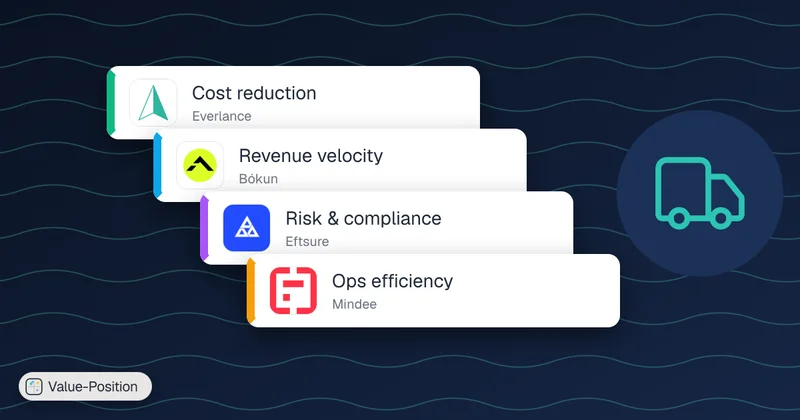
A deliberate starter stack for logistics and field services firms: one pick for each business outcome, the runners-up that beat them in specific cases, and how the pieces fit together.
Frequently asked questions
Is Salesforce Sales Cloud or HubSpot cheaper per year?
HubSpot costs less in our orderings. Typical annual cost is $15,000 a year for HubSpot against $30,000 a year for Salesforce Sales Cloud. HubSpot's entry point is a free plan, while Salesforce Sales Cloud starts from $300 a year. Neither vendor records a mandatory implementation fee, so the gap comes from licence tiers and how much admin or partner help your rollout needs.
Which is faster to implement?
Our orderings put HubSpot ahead of Salesforce Sales Cloud on both time-to-value and implementation effort. HubSpot's recorded time-to-value is about 4 weeks with friction of 2 out of 5, against 4 out of 5 for Salesforce Sales Cloud. In practice that means less configuration and data migration before the first productive week, though complex pipelines still take planning on either platform.
Can you connect either to AI assistants (MCP)?
Neither vendor's cited pages list an MCP server for Salesforce Sales Cloud or HubSpot, so we cannot confirm assistant connections over MCP. Both describe their own agentic AI inside the product: Agentforce on Salesforce Sales Cloud, and Agent Hub with Customer, Prospecting and Data agents on HubSpot. Standard connectors are listed separately, with Salesforce native to Salesforce Sales Cloud and Slack through partners, and AWS native to HubSpot alongside Google Workspace and Microsoft 365 through partners.
Which suits a smaller team?
HubSpot generally suits smaller teams better. It starts from a free plan, costs less per year in our orderings and is recorded at 2 out of 5 on implementation effort, so a team without a dedicated admin can reach a working CRM quickly. Salesforce Sales Cloud is built for organizations at scale; its own not-for list includes very small teams that want a zero-configuration CRM without a sales call.