The Logistics & Field Services Software Stack (2026): One Pick per Business Outcome
A deliberate starter stack for logistics and field services firms: one pick for each business outcome, the runners-up that beat them in specific cases, and how the pieces fit together.
By Value-Position · Published · Written with AI from our dataset; figures update live
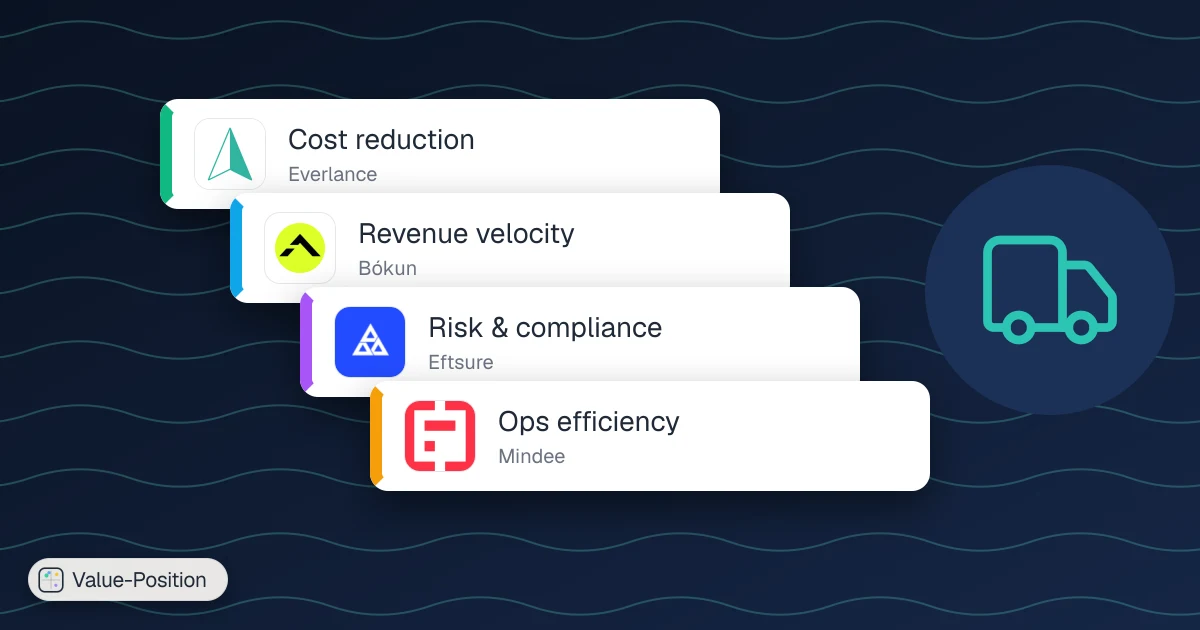
Logistics and field services businesses rarely buy software in one go. Mileage and expense claims, seat sales, payment fraud and inbound paperwork each surface at a different point, and each usually gets solved by whichever tool is nearest to hand. The result is a stack with gaps in the ledger and overlaps on the road.
We picked one tool per business outcome using the value index behind this site: lowest typical annual cost, fastest time-to-value and lightest implementation effort inside that outcome, weighed against fit for delivery fleets, field crews, passenger transport and parcel-heavy operations. Every pick either publishes pricing or states plainly that it is quote-based, and every runner-up is named with the case where it wins instead.
The four outcomes are cost reduction, revenue velocity, risk and compliance, and operations efficiency.
Cost Reduction: Everlance

Everlance
Automatic mileage and expense tracking that turns every business drive into tax deductions and faster reimbursements
- Time-to-Value
- Same day, self-serve setup
- Typical TCO
- $99/yr
Everlance is the Cost Reduction pick because it attacks the largest avoidable cost in a driver-heavy business: untracked mileage. Trips are captured by GPS, cards and bank accounts sync automatically, and the app produces IRS-compliant logs and reimbursement reports for cents-per-mile, FAVR or accountable-plan programs. Typical annual cost is the lowest of the tools compared here, $99 a year, and it goes live in about 1 day with an implementation effort of 1 out of 5.
Shoeboxed is the runner-up when the problem is paper rather than miles: fuel, toll and maintenance receipts that need scanning, human verification and an audit-ready archive, at $297 a year. Refund Retriever is the other option, auditing parcel carrier invoices and charging only from refunds it recovers, with pricing on request.
Also consider: Shoeboxed, Refund Retriever
Revenue Velocity: Bókun

Bókun
The complete booking and channel management solution for extraordinary experiences.
- Time-to-Value
- First Viator bookings in ~5 days
- Typical TCO
- $2k/yr
Bókun is the Revenue Velocity pick for the side of logistics that sells seats: shuttle, transfer and ground transport operators. It pairs an availability calendar with a no-code booking widget and marketplace distribution, so a transfer provider can list capacity where travellers already shop, and it handles pick-up and drop-off points with location-based pricing. Typical annual cost is $1,788 a year and it goes live in about 5 days.
Pipedrive suits businesses whose revenue comes from quoting freight and courier work instead of selling seats; it covers lead routing, follow-ups and forecasting, and its seat pricing is on request. Clari is the option for larger sales organisations with CRM discipline that need forecast accuracy, listing SOC 2, ISO 27001 and GDPR compliance plus an official MCP server, but it takes about 2 months to roll out.
Also consider: Pipedrive, Clari
Risk & Compliance: Eftsure

Eftsure
Continuous payment-verification layer that confirms every payee's identity and bank account before money moves.
- Time-to-Value
- 2–4 weeks
- Typical TCO
- On request
Eftsure is the Risk & Compliance pick because logistics payment runs are where money leaks. Before a B2B payment leaves, it verifies payee identity and bank account ownership, layering government registry checks, sanctions screening, network intelligence and machine-learning anomaly detection, with human fraud analysts on unresolved cases. It connects natively to SAP, sells as one platform rather than modules, lists ISO 27001, and is quoted on payment spend.
Motive and Netradyne are the runners-up when the compliance risk sits on the road rather than in the ledger. Motive combines ELD and hours-of-service compliance with AI dash cams and driver coaching, and quotes per vehicle. Netradyne analyses drive time continuously for driver coaching, lists ISO 27001 and HIPAA, and offers support around the clock. Both put hardware in every cab, so pilots get scoped by depot.
Also consider: Motive, Netradyne
Ops Efficiency: Mindee

Mindee
Developer-first AI document processing API that turns invoices, receipts and IDs into structured JSON with no model training
- Time-to-Value
- Minutes to a few days
- Typical TCO
- $1k/yr
Mindee is the Ops Efficiency pick because inbound paperwork is the bottleneck most logistics operations can automate. Pre-trained models turn invoices, receipts, delivery notes and ID documents into structured JSON with no training data and no data-science work, and two-way matching, the PO number on a purchase order against the SKU list on a delivery note, is a documented use. Mixed batches of shipping paperwork can be split and classified first. Typical annual cost is $1,393 a year and go-live is about 2 days.
Buddy Punch is the runner-up when the drag is hours rather than documents: GPS, geofenced and photo-verified punches for drivers and field crews, with job and location codes routed to payroll. ezeep covers warehouse printing of labels, pick lists and shipping documents without print servers.
Also consider: Buddy Punch, ezeep
The stack at a glance
| Metric | Everlance | Bókun | Eftsure | Mindee |
|---|---|---|---|---|
| Typical annual cost | $99/yr | $1,788/yr | On request | $1,393/yr |
| Time-to-value | Same day, self-serve setup | First Viator bookings in ~5 days | 2–4 weeks | Minutes to a few days |
| Implementation friction | 1/5 | 2/5 | 2/5 | 1/5 |
| MCP (AI assistants) | Not recorded | Not recorded | Not recorded | Not recorded |
| Compliance listed | None listed | None listed | ISO 27001 | None listed |
Estimates from each vendor’s public pages, refreshed regularly. Confirm pricing with the vendor.
Making the pieces work together
The picks share no native connectors with each other; that is normal for a stack assembled outcome by outcome. What overlaps is identity and messaging. Shoeboxed, Pipedrive, Buddy Punch and ezeep connect through Google Workspace, Pipedrive and ezeep also through Microsoft 365, and Eftsure has a native SAP connection. Only ezeep and Clari list an official MCP server, so agent access currently reaches those two.
On cost, the three picks with published pricing come to $99 a year, $1,788 a year and $1,393 a year a year. Eftsure is quote-based, and none of the four picks charges a mandatory implementation fee.
Keep exploring
Salesforce Sales Cloud and HubSpot both sell CRM for revenue teams, but they cost differently and take different effort to roll out. Here is how they compare on price, setup time, integrations, AI and compliance.
Frequently asked questions
What software does a logistics and field services business need first?
Start with the outcome that costs you money today. If drivers run up untracked mileage, Everlance captures trips and produces reimbursement-ready logs from $99 a year. If paperwork is the drag, Mindee turns invoices and delivery notes into structured data from $1,393 a year. If you sell passenger seats, Bókun adds marketplace distribution. Supplier payment fraud is usually next, and that is where Eftsure fits.
What does the whole stack cost per year?
Three of the four picks publish typical annual costs: $99 a year, $1,788 a year and $1,393 a year. Eftsure is quote-based and priced on annual payment spend and new-vendor onboarding volume. If you take a runner-up instead, Pipedrive and Clari are also quote-based, while Shoeboxed, Buddy Punch and ezeep publish subscriptions. None of the four picks charges a mandatory implementation fee.
Do these tools integrate with each other?
Not directly. The vendor pages list no native connectors between the four picks. What they share is identity and messaging plumbing: several runners-up connect through Google Workspace, Pipedrive and ezeep also through Microsoft 365, and Eftsure has a native SAP connection. ezeep and Clari list an official MCP server. Expect to join the data yourself, usually through your ERP, TMS or payroll system.
How long does this stack take to roll out?
Fast, individually. Everlance goes live in about 1 day, Mindee in about 2 days, Bókun in about 5 days and Eftsure in about 4 weeks. The mileage and document tools are close to self-serve. Payment verification takes longer because supplier and bank records have to be loaded. The real delay is usually internal: agreeing reimbursement rules and cleaning supplier data before go-live.