The Hospitality & Travel Software Stack (2026): One Pick per Business Outcome
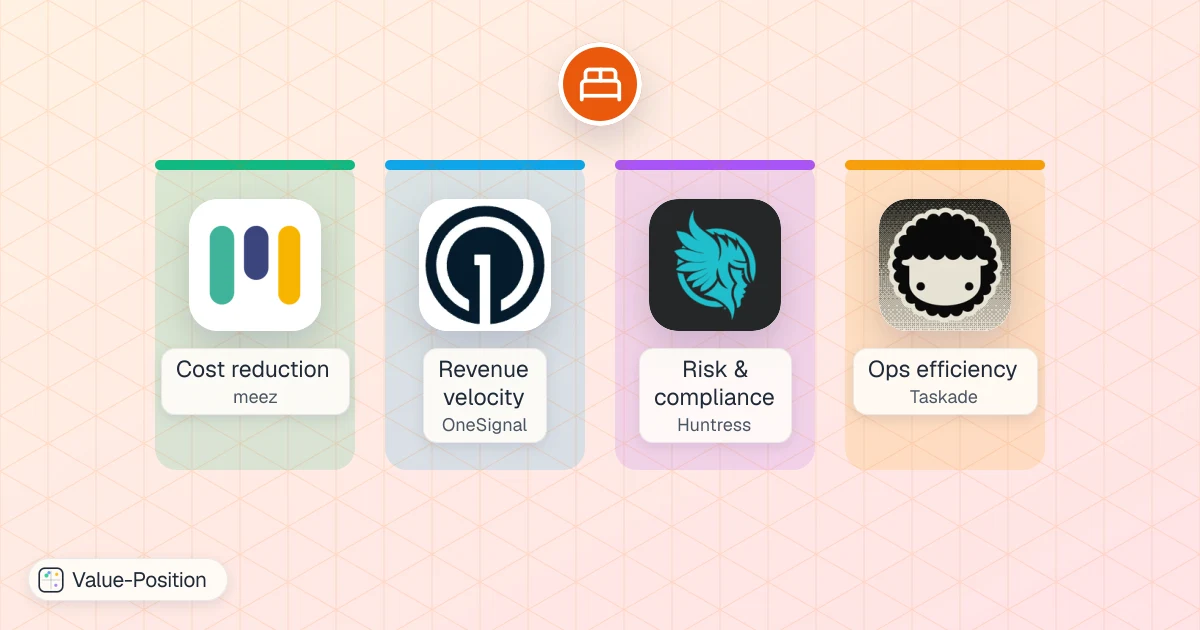
One pick for each of four business outcomes — cost reduction, revenue velocity, risk and compliance, and operations efficiency — chosen for cost, time-to-value and implementation effort. Each pick comes with the runners-up that fit a different operating model.
By Value-Position · Published · Written with AI from our dataset; figures update live
A hospitality and travel business rarely fails for lack of software. It fails when the stack grows sideways: a booking engine here, a spreadsheet there, a security tool nobody owns. A short, deliberate list — one tool per business outcome — is easier to run day to day and easier to defend at budget time.
We picked one tool for each of four outcomes: cost reduction, revenue velocity, risk and compliance, and operations efficiency. Within each outcome we order the tools we track by typical annual cost, time-to-value and implementation effort, then lead with the option that holds up on all three. Runners-up appear where a different operating model, geography or team size makes them the better fit. The tables carry the numbers; this piece carries the reasoning.
Cost Reduction: meez

meez
Recipe management and food costing software that gives restaurants one source of culinary truth
- Time-to-Value
- 3 days or less
- Typical TCO
- $2k/yr
meez takes the Cost Reduction slot on economics. It carries the lowest typical annual cost of the Cost Reduction tools compared here at $2,148 a year, with the lightest implementation effort among them at 1 out of 5, and recipe data is typically fully costed in about 3 days. An official MCP server means your own AI assistants can work with recipe and costing data directly, and the vendor lists document processing, AI search and predictive analytics.
Reach for a runner-up when the spend sits elsewhere. Clara fits groups with operations in Mexico, Colombia or Brazil that need corporate cards, reimbursements and travel spend controlled in one place, at $3,000 a year. Market Dojo fits procurement teams benchmarking multi-property contracts such as F&B, utilities and housekeeping through RFx and reverse auctions, at $9,000 a year.
Also consider: Clara, Market Dojo
Revenue Velocity: OneSignal

OneSignal
Customer engagement platform for push, email, SMS/RCS, in-app messaging, and Live Activities.
- Time-to-Value
- Same day for SDK integration
- Typical TCO
- $228/yr
OneSignal is the Revenue Velocity pick. It carries the lowest typical annual cost among the Revenue Velocity tools compared here at $228 a year before usage fees tied to subscribers and sends, needs 1 out of 5 to implement, and campaigns can go live in about 1 day. Push, email, SMS/RCS, in-app messaging and Live Activities sit in one platform, with an in-dashboard assistant, agentic workflows and text automation; the vendor lists Anthropic among the models involved.
MailerLite is the better call when email, landing pages and paid newsletters are the whole job: no implementation fee, an official MCP server and round-the-clock support, at $300 a year. GloriaFood suits independents that want commission-free ordering and reservations, at a typical $936 a year, but the vendor has announced end of life with no named replacement, so treat it as a near-term fit.
Also consider: MailerLite, GloriaFood
Risk & Compliance: Huntress

Huntress
Fully managed security platform: 24/7 AI-assisted SOC delivering EDR, identity threat detection, SIEM and awareness training for businesses of all sizes.
- Time-to-Value
- Under 1 day (about 30 minutes to deploy)
- Typical TCO
- $12k/yr
Huntress takes Risk & Compliance because it asks least of a lean team. Effort is 1 out of 5, value lands in about 1 day, and there is no implementation fee or SOC add-on charge. Managed endpoint detection and response, identity threat detection for Microsoft 365 and Google Workspace, SIEM and awareness training sit under a round-the-clock SOC at a typical $12,000 a year. The vendor also publishes an official MCP server, and a published case study covers a hotel chain where an intruder was found and removed before damage occurred.
ApprovalMax fits groups that need a logged approval chain in front of Xero, QuickBooks Online or Oracle NetSuite rather than detection; it lists ISO 27001 and charges no implementation fee, though pricing is on request. Certn fits seasonal hiring pushes: checks are priced per order with no minimums, and it lists SOC 2, ISO 27001 and GDPR.
Also consider: ApprovalMax, Certn
Ops Efficiency: Taskade

Taskade
AI business app builder: one prompt becomes a hosted app with AI agents, automations and workspace memory in one living workspace.
- Time-to-Value
- Same day for a first app
- Typical TCO
- $300/yr
Taskade is the Ops Efficiency pick and is AI-native: the vendor says AI does the product's core job, so a plain-English prompt produces a hosted dashboard, client portal or CRM wired to workspace data, with agents, automations and native connectors for Slack, Salesforce, HubSpot, Google Workspace and Microsoft 365. Effort is 1 out of 5, value arrives in about 1 day, and typical annual cost is one of the lowest among Ops Efficiency tools at $300 a year. It routes models from OpenAI, Anthropic, Google, Amazon and open-weight providers, supports bring your own key, ships an official MCP server and states it never trains on customer data.
For rostering rather than dashboards, Findmyshift schedules shift teams with a free time clock at $459 a year. Loyverse covers front-desk and bar sales with a free core POS at $550 a year. One caveat: Taskade says it is not certified for regulated data, so properties handling health or cardholder data in the same workspace should look elsewhere.
Also consider: Findmyshift, Loyverse
The stack at a glance
| Metric | meez | OneSignal | Huntress | Taskade |
|---|---|---|---|---|
| Typical annual cost | $2,148/yr | $228/yr | $12,000/yr | $300/yr |
| Time-to-value | 3 days or less | Same day for SDK integration | Under 1 day (about 30 minutes to deploy) | Same day for a first app |
| Implementation friction | 1/5 | 1/5 | 1/5 | 1/5 |
| MCP (AI assistants) | Official MCP server | Not recorded | Official MCP server | Official MCP server |
| Compliance listed | None listed | None listed | None listed | None listed |
Estimates from each vendor’s public pages, refreshed regularly. Confirm pricing with the vendor.
Making the pieces work together
Three of the four picks — meez, Huntress and Taskade — publish an official MCP server, so the same AI assistants can query recipe, endpoint and workspace data. Microsoft 365 and Google Workspace appear as native connectors in both Huntress and Taskade, Slack is native in Taskade, and meez and OneSignal both list Snowflake among partner integrations.
On cost, the typical annual figures are $2,148 a year, $228 a year, $12,000 a year and $300 a year, and none of the four charges a mandatory implementation fee. Huntress is the largest of those lines, so model endpoint and identity counts before signing. These are four point tools, not one suite: booking engines, property management and channel management stay outside the stack.
Keep exploring

This month's report measures how widely business software ships AI features, how many tools connect to a buyer's own AI assistants, and what vendors disclose about training, audit logs and certifications.
Frequently asked questions
What software does a hospitality and travel business need first?
Start with the outcome that is costing you most, not with the longest feature list. If food cost and menu margins are the problem, meez typically has costed recipes live in about 3 days at $2,148 a year. If you need repeat visits and trip updates, OneSignal covers push, email and in-app messaging from $228 a year. Lean IT teams with shared admin accounts usually start with Huntress; small properties that want an operations dashboard and a booking portal start with Taskade.
What does the whole stack cost per year?
Typical annual figures are $228 a year, $300 a year, $2,148 a year and $12,000 a year in ascending order, and none of the four picks charges a mandatory implementation fee. Huntress is the largest line and is priced per endpoint, identity, learner or data source, so volume drives it. OneSignal adds usage fees on top of its platform fee for subscribers and sends, which matters if your traffic peaks seasonally.
Do these tools integrate with each other?
Partly. meez, Huntress and Taskade each publish an official MCP server, so an AI assistant can work across recipe, endpoint and workspace data. Microsoft 365 and Google Workspace are native connectors in both Huntress and Taskade, Slack is native in Taskade, and meez and OneSignal both list Snowflake among partner integrations. There is no single suite here: each tool stays a point solution, and property systems such as a booking engine or PMS sit outside this stack.
How long does the stack take to roll out?
Deployment is measured in days, not quarters. meez lists about 3 days to fully costed recipes, the slowest of the four picks and still light. Huntress lands in about 1 day, OneSignal in about 1 day and Taskade in about 1 day, and none of the four charges a mandatory implementation fee. The longer work is internal: collecting recipes, agreeing approval routes and tagging endpoints and identities.